ARCHIVE / Dates and personal milestones retain their original context. Select EN to read the original English text.
CHILDHOOD LANDSCAPES / COULSDON & SHEPPEY
Sheerness landmarks, days in Coulsdon, racing and the familiar places of my childhood. These oil paintings sit alongside my personal history, with memories and historical context for each location.
↖ Back to my history14 places to explore
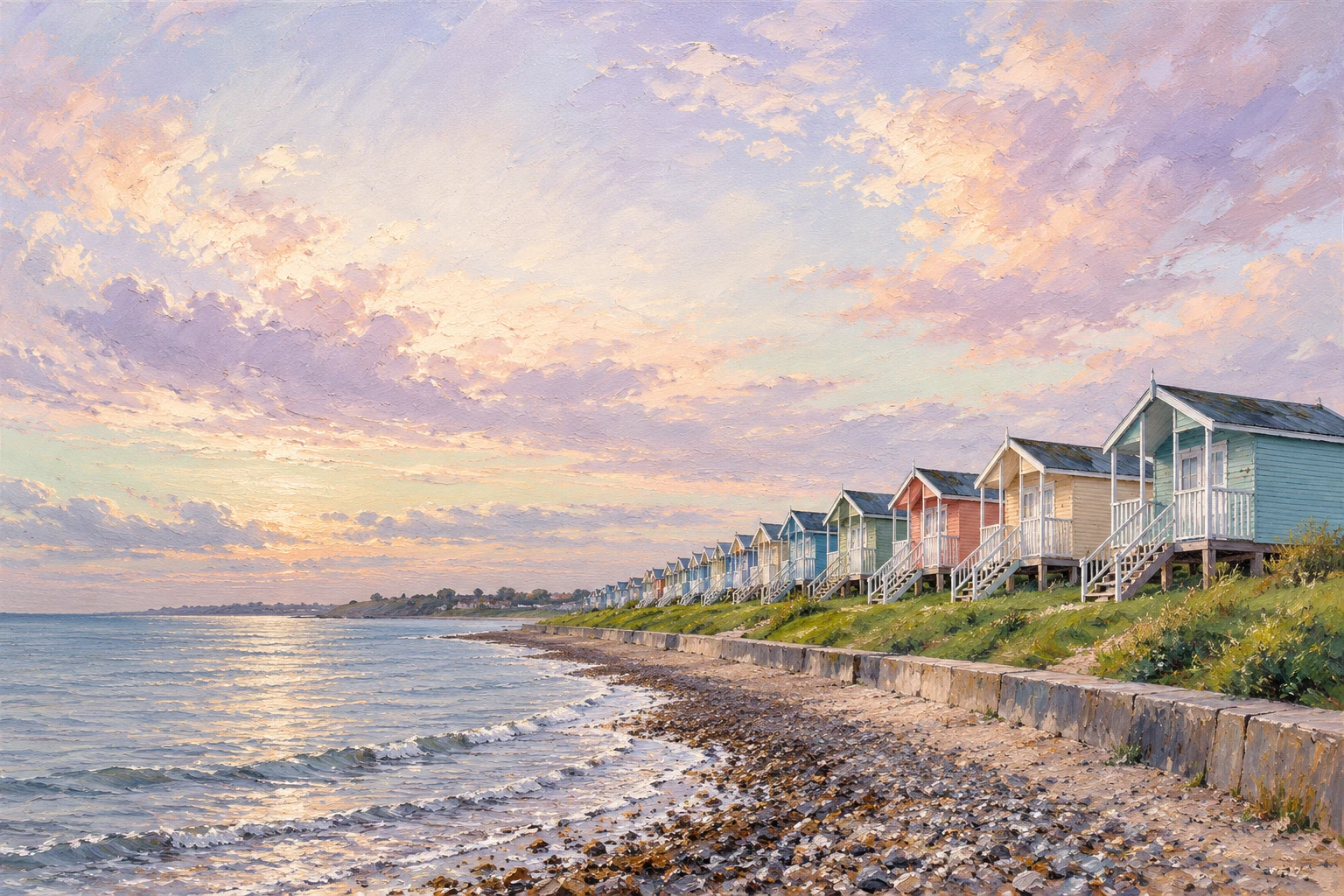
01 / SHEERNESS / THE COAST
Sheerness beach huts
The coast, in colour.
The raised beach huts, white railings and shoreline that inspired the first painting on this website. A local scene reimagined through colour and brushwork.
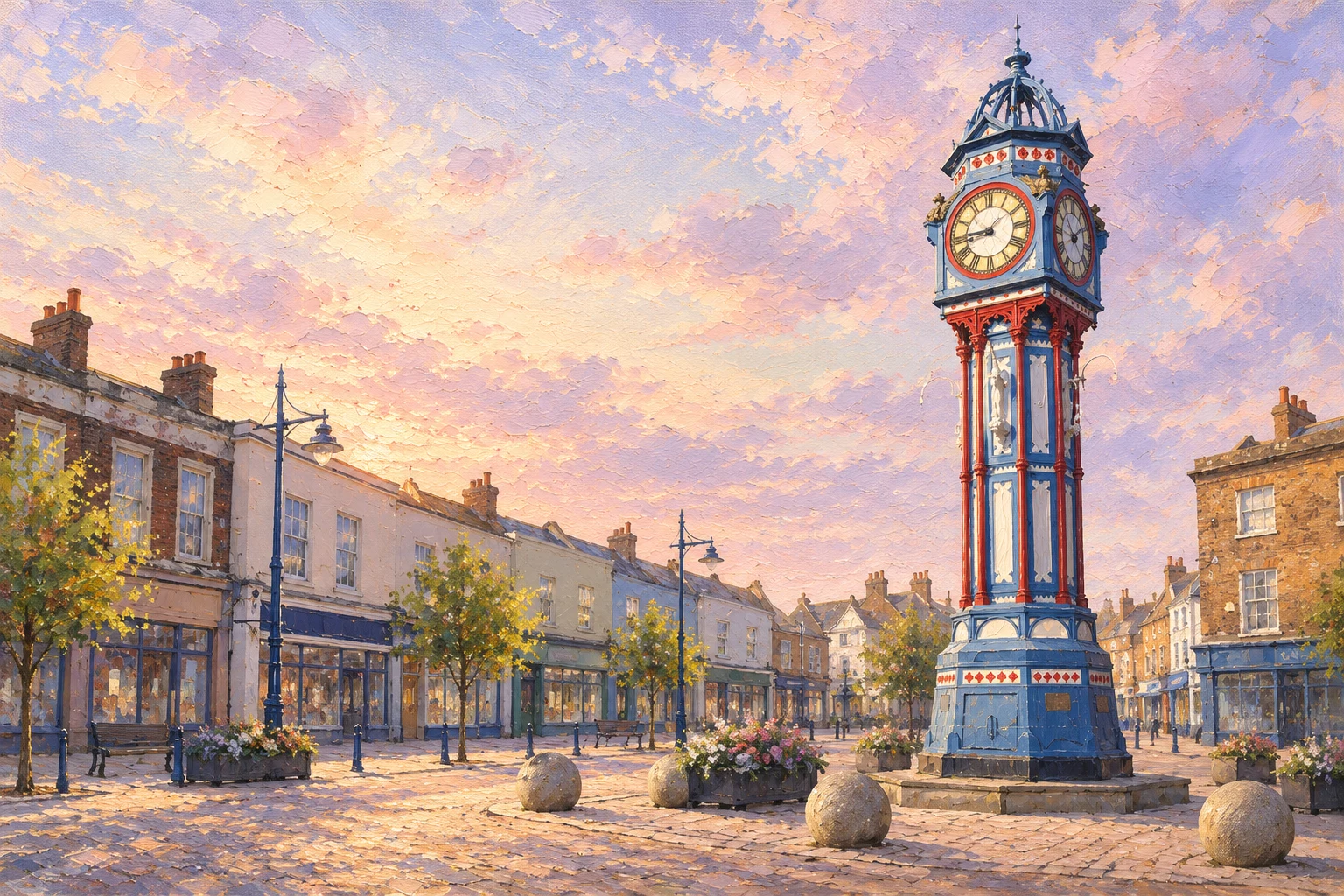
02 / SHEERNESS / THE TOWN CENTRE
The town clock
A familiar meeting point.
The ornate town-centre clock tower is one of Sheerness’s distinctive landmarks. Historic England records the tower as a Grade II listed building. Here, its blue ironwork and red detailing become the centre of a painted townscape.
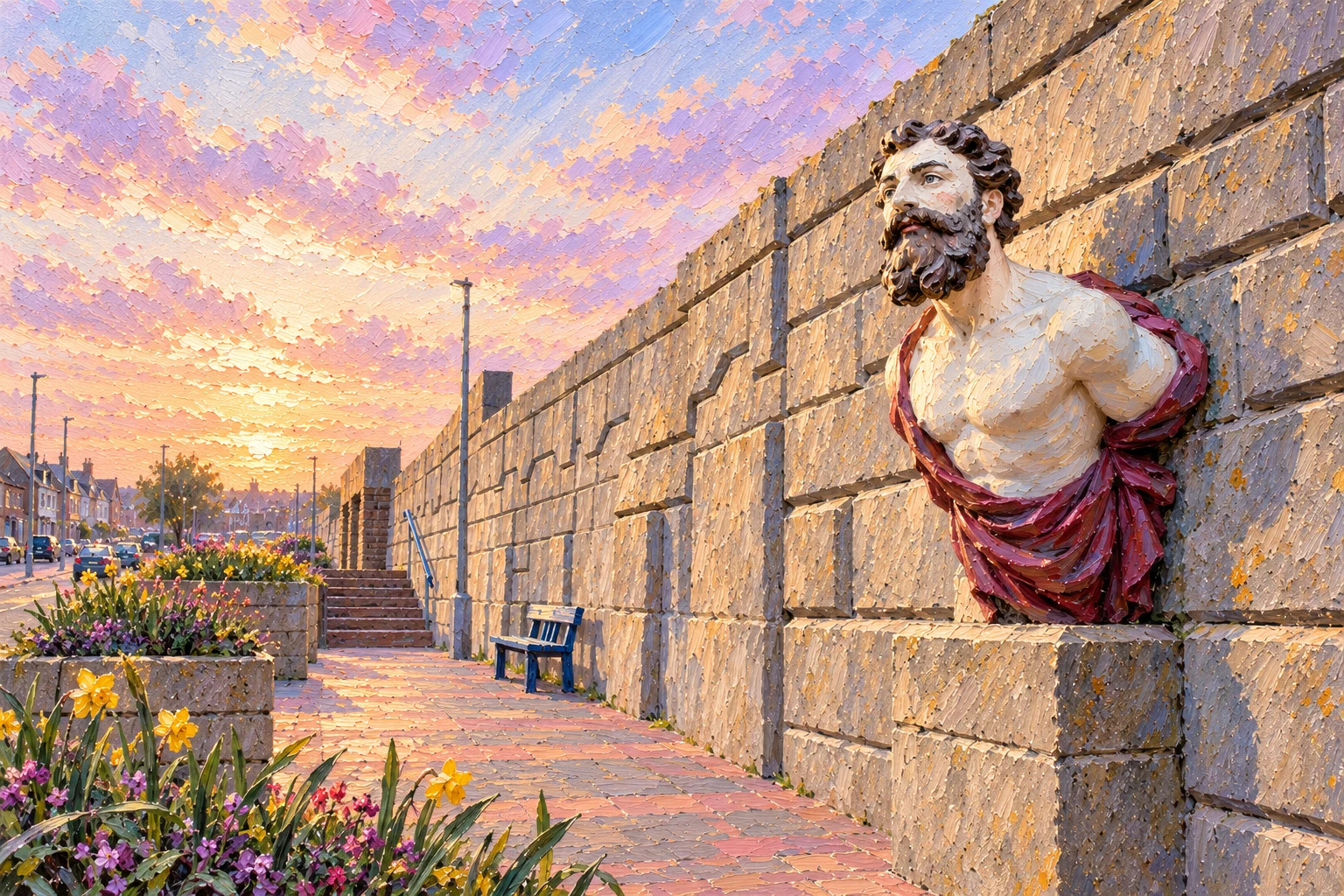
03 / MARINE PARADE / MARITIME HERITAGE
The Man on the Wall
A face from the maritime past.
The figure on the sea-defence wall is a reproduction of the figurehead of HMS Forte. Swale’s Marine Town conservation appraisal records the reproduction on Marine Parade. The painting shows the figurehead on the inland side of the wall, beside the paved promenade and planting.
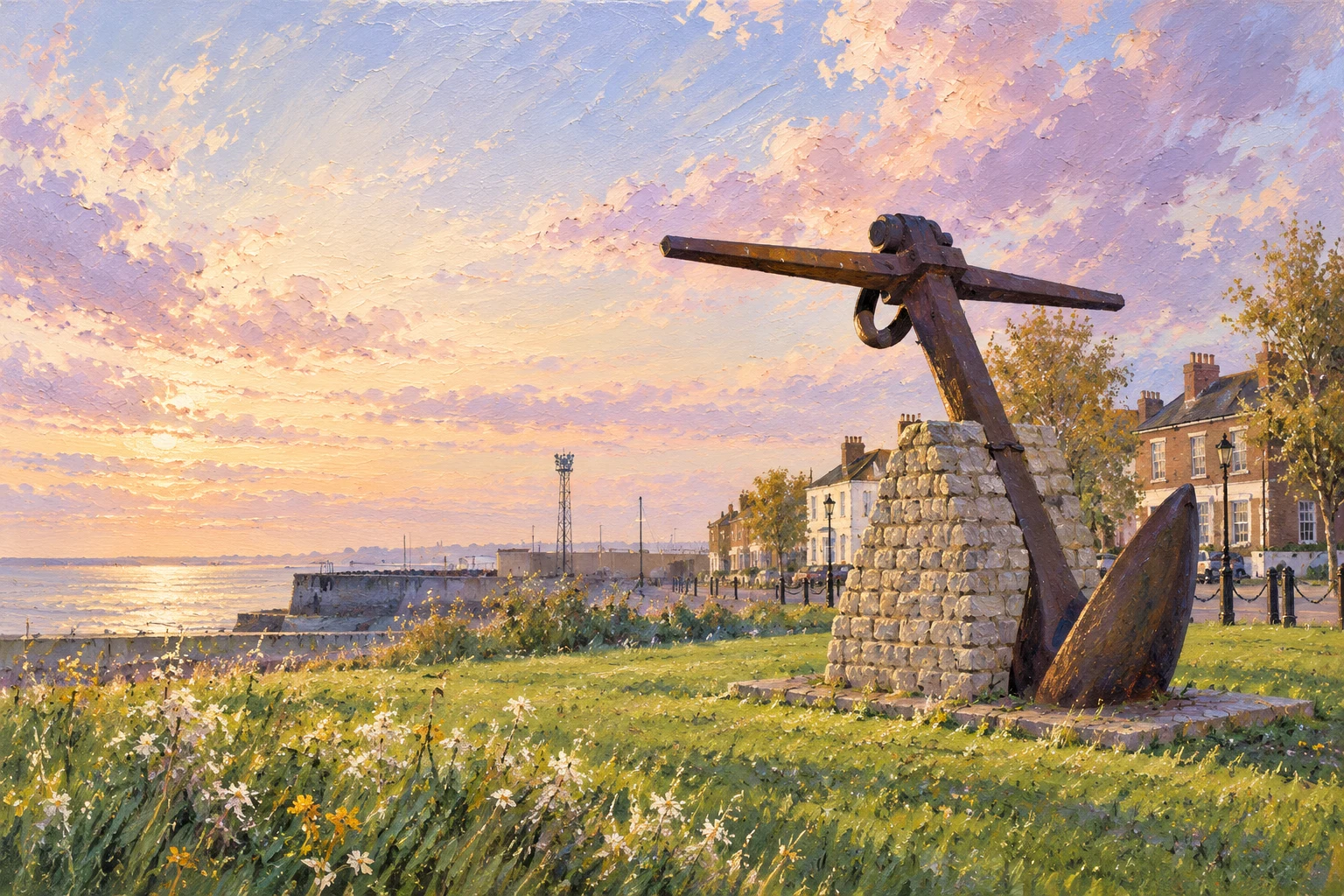
04 / BLUE TOWN / SHEERNESS
The Blue Town anchor
An anchor to the island’s story.
The large anchor and stone plinth are a familiar part of Blue Town’s maritime landscape. For more of the area’s maritime and social history, the Blue Town Heritage Centre is a useful local starting point.
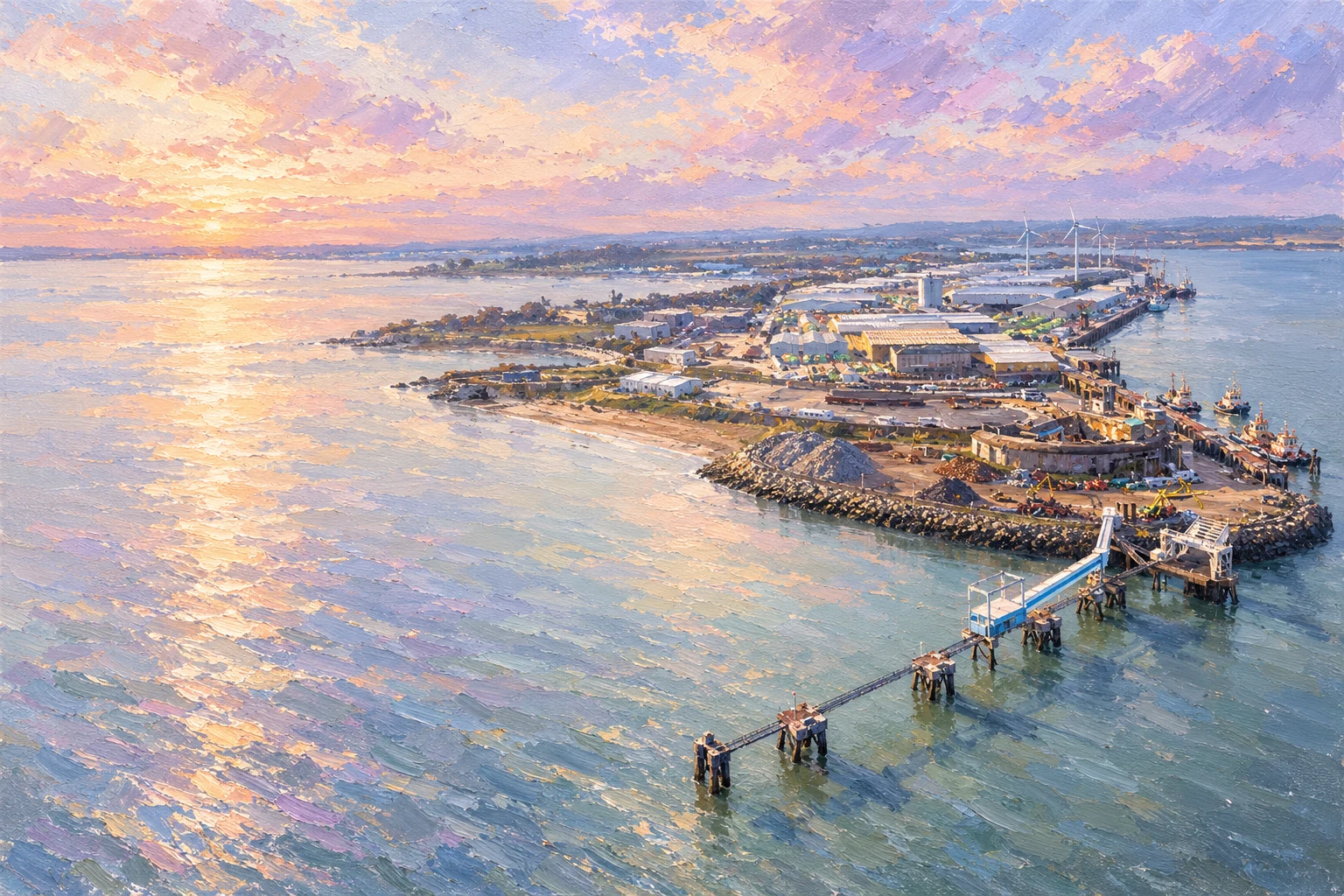
05 / SHEERNESS / THE WORKING WATERFRONT
The Port of Sheerness
An island connected to the world.
The working waterfront is another part of Sheerness’s identity. This elevated painted view takes in the quays, warehouses, jetty and estuary. Sheerness is part of Peel Ports’ London Medway operation.
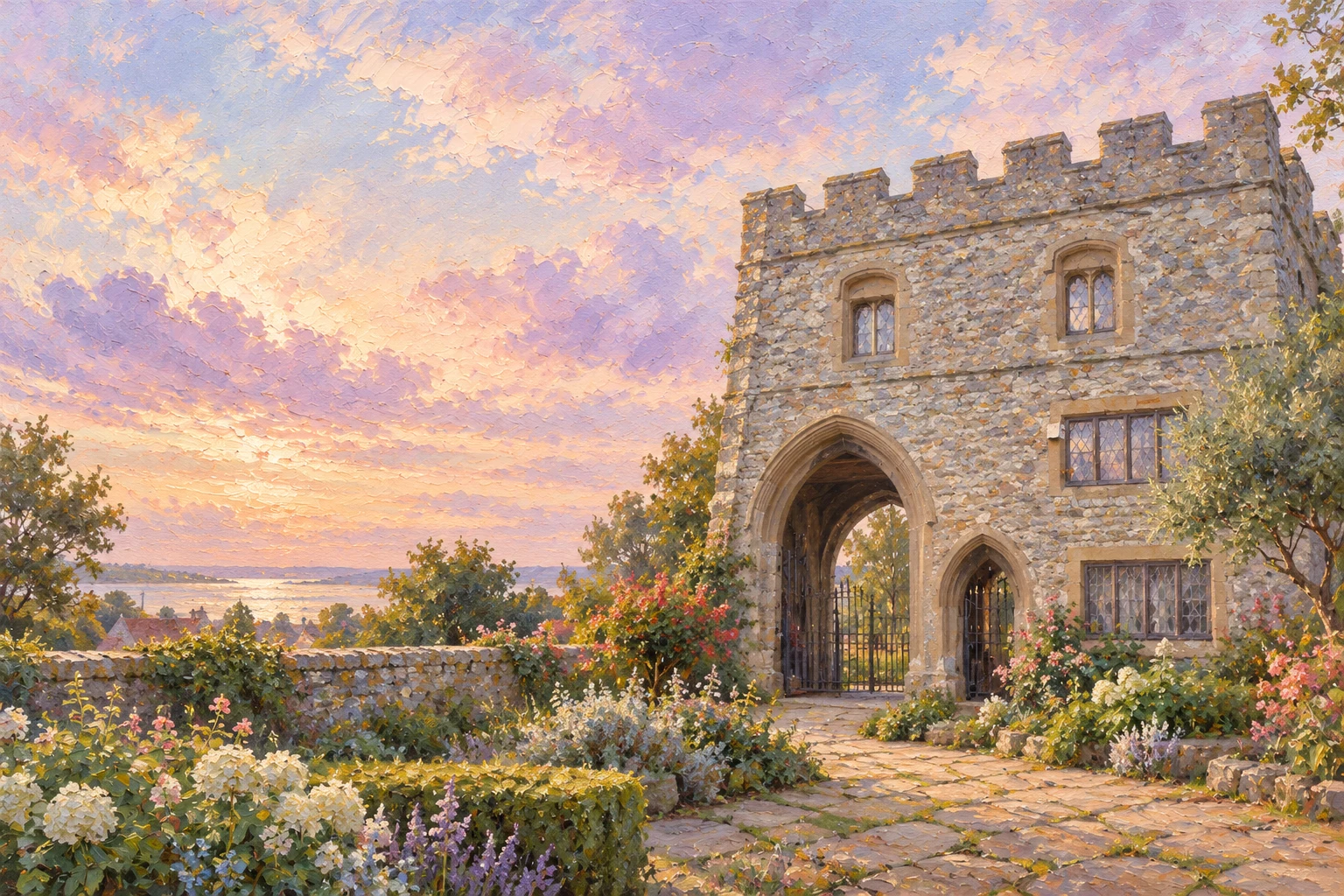
06 / MINSTER-ON-SEA / MEDIEVAL HERITAGE
Minster Abbey Gatehouse
Centuries held in stone.
The abbey’s foundation is recorded by Historic England as AD 664. The surviving gatehouse is a later medieval building, rather than a structure dating from 664. This painting focuses on its pointed arches, stonework and garden setting.
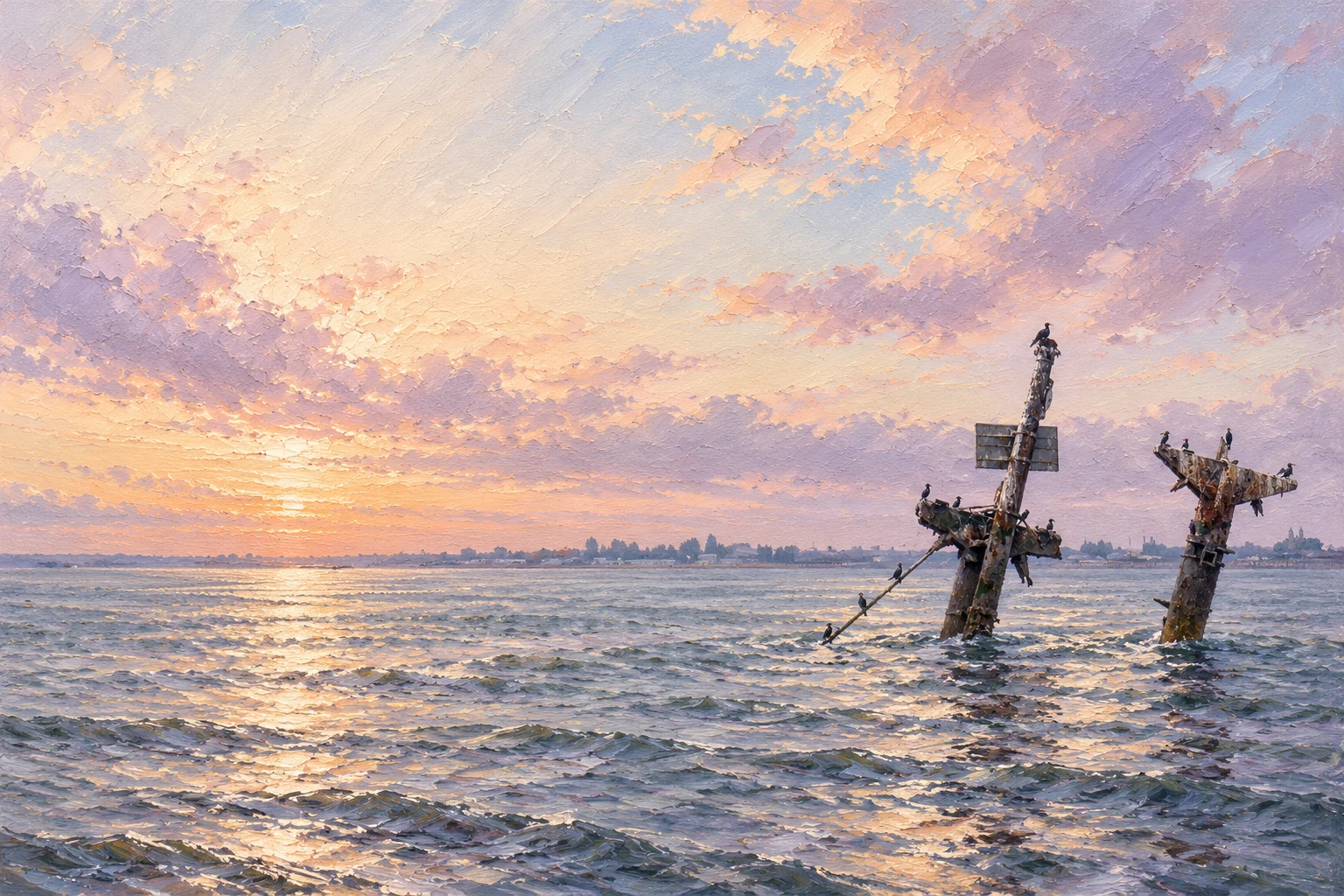
07 / THAMES ESTUARY / A HISTORICAL VIEW
SS Richard Montgomery
A remembered silhouette.
A historical interpretation of the wreck’s protruding masts, remembered above the estuary waters. On 19 October 2026, the Department for Transport reported that all three masts had been removed and transferred to The Historic Dockyard Chatham. The wreck’s exclusion zone remains in force.
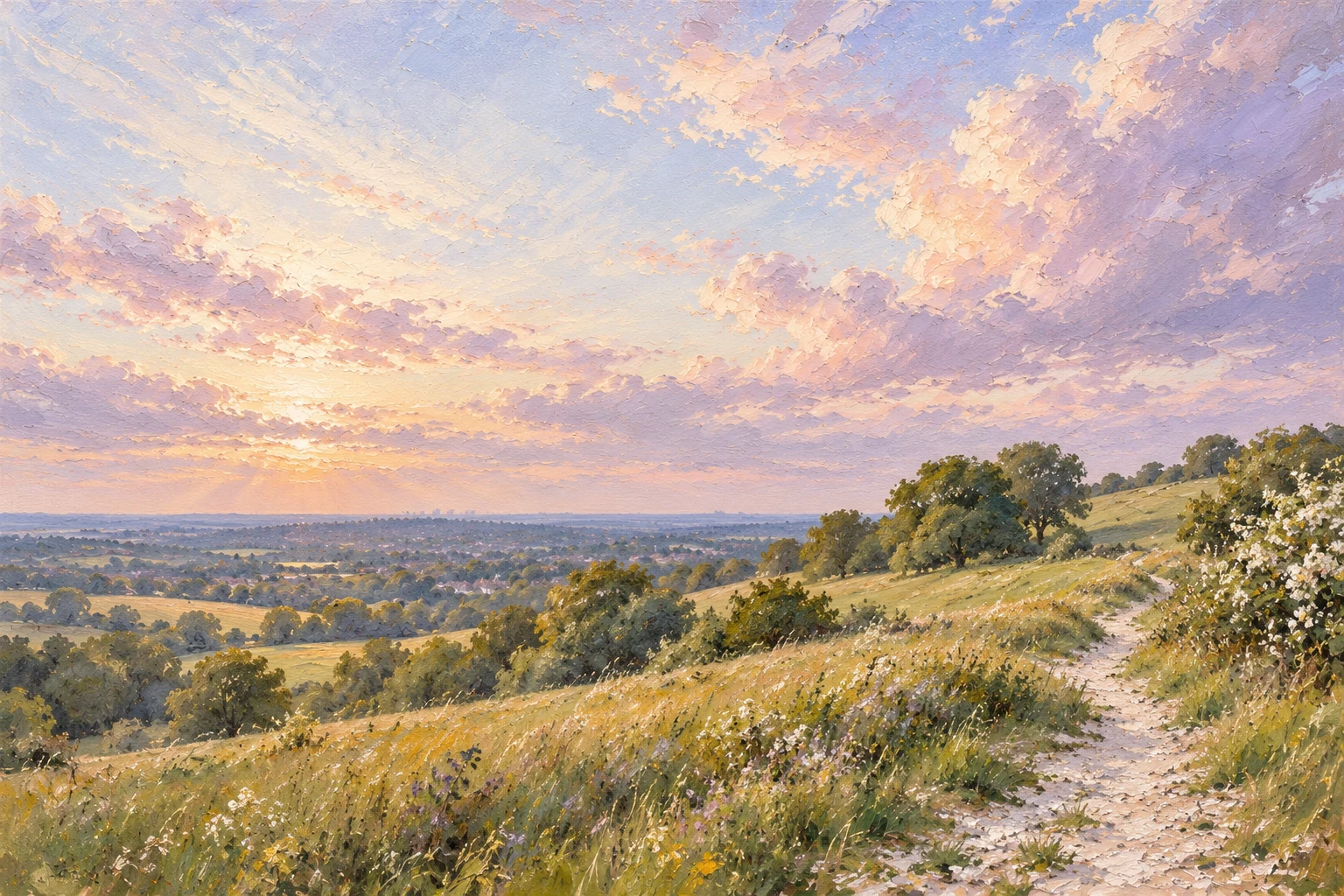
08 / COULSDON / THE NORTH DOWNS
Farthing Downs, Coulsdon
The landscape before the coast.
Coulsdon forms part of my own background, before my family moved to Kent. Farthing Downs brings chalk grassland, ancient landscape features and open countryside to this collection. The City of London’s heritage account describes the layers of history visible in the Downs. This artwork is an interpretation of that landscape.
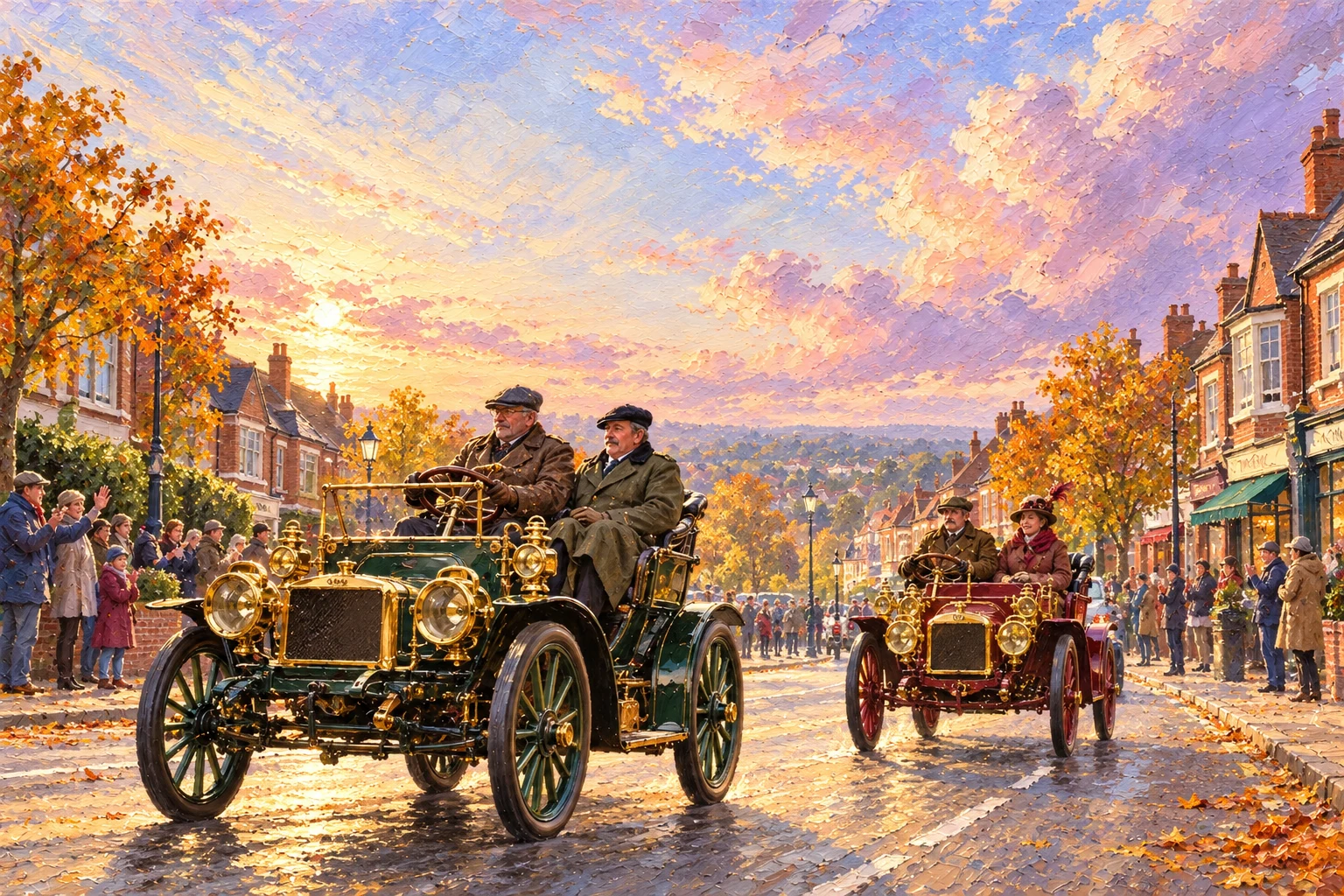
09 / COULSDON / MOTORING HERITAGE
London to Brighton Veteran Car Run
History, passing through.
Brass lamps, open-top cars and an autumn roadside crowd. This painting celebrates the London to Brighton Veteran Car Run and its connection with Coulsdon. The organisers’ spectator guide includes Coulsdon High Street among the places to watch. The Veteran Car Club describes it as a run rather than a race, with cars built before 1905. The scene is an artistic evocation, rather than a record of a particular year.
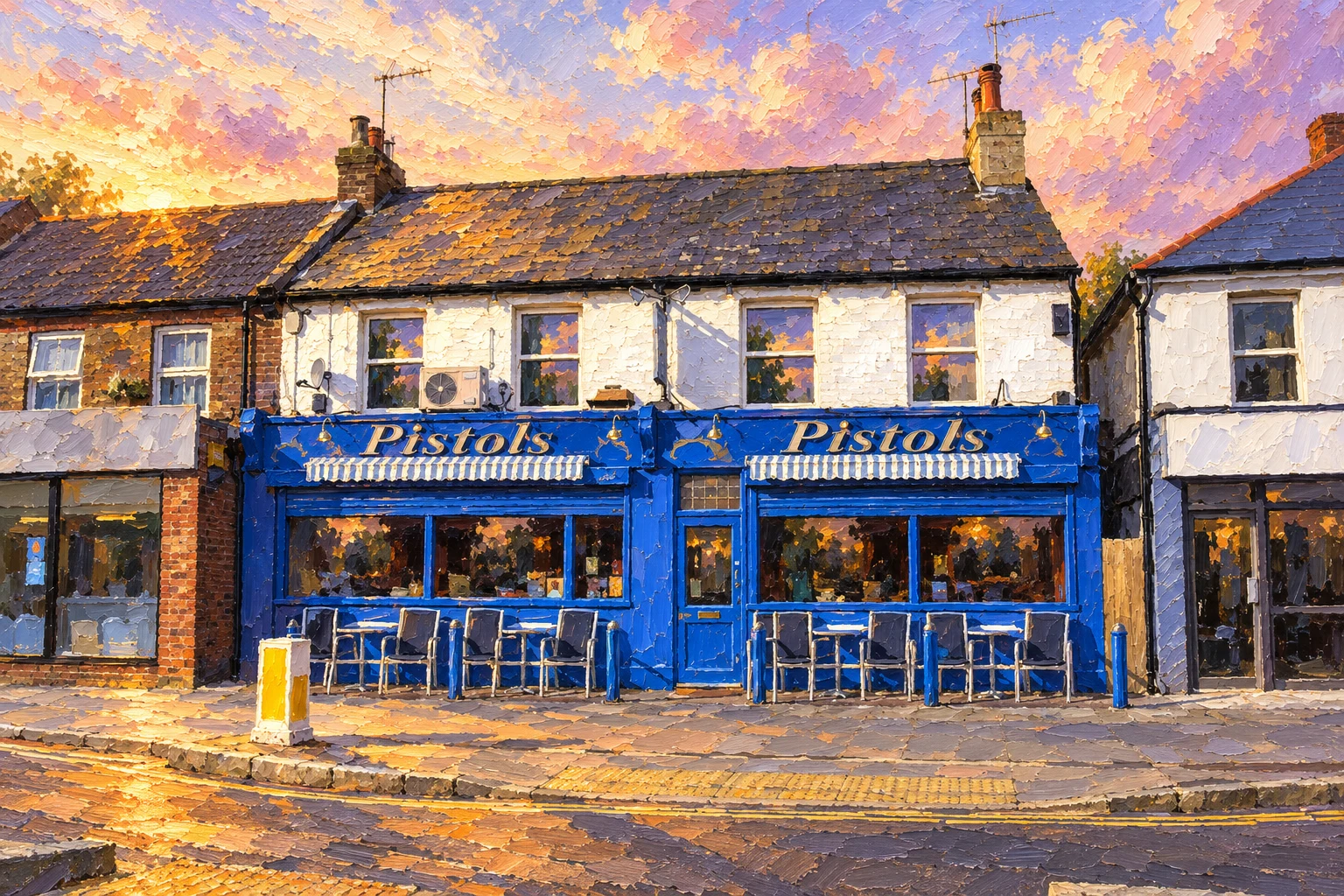
10 / COULSDON / AFTER-SCHOOL MEMORIES
Pistols, Coulsdon
A familiar blue frontage.
Pistols is one of the pubs I grew up around. After school, Mum would meet her friends here. I was the oldest of the six of us, and I remember those afternoons as time to play, talk and be together. That blue frontage belongs to a very familiar part of my childhood.
A personal recollection by Taylor
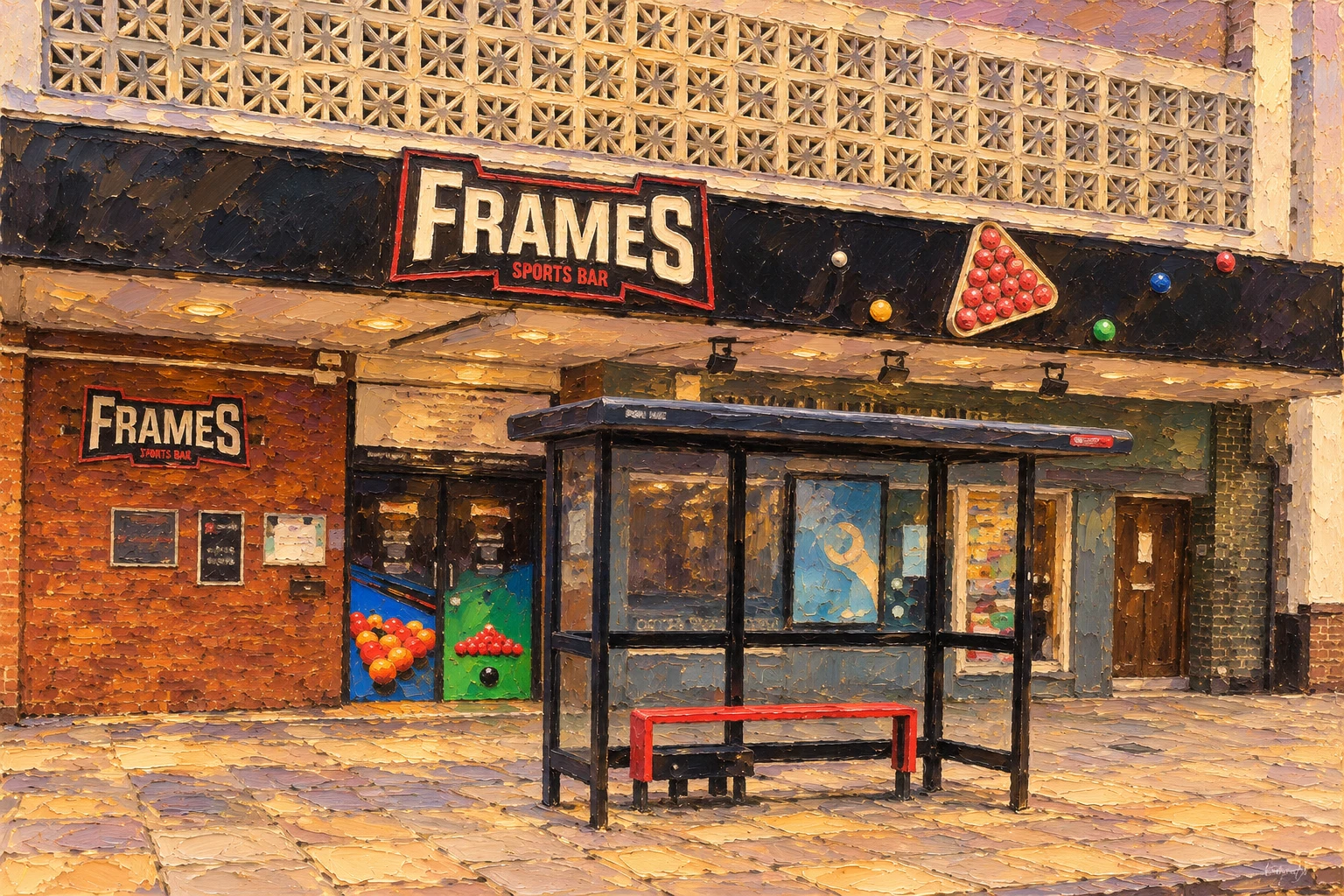
11 / COULSDON / GAMES & GROWING UP
Frames Sports Bar
More than a sign above a doorway.
Frames and Pistols are tied together in my after-school memories. While Mum spent time with her friends, we would run around, play the arcade games, have a go at snooker and chat. These were ordinary afternoons at the time, but they became part of the story of growing up in Coulsdon.
A personal recollection by Taylor
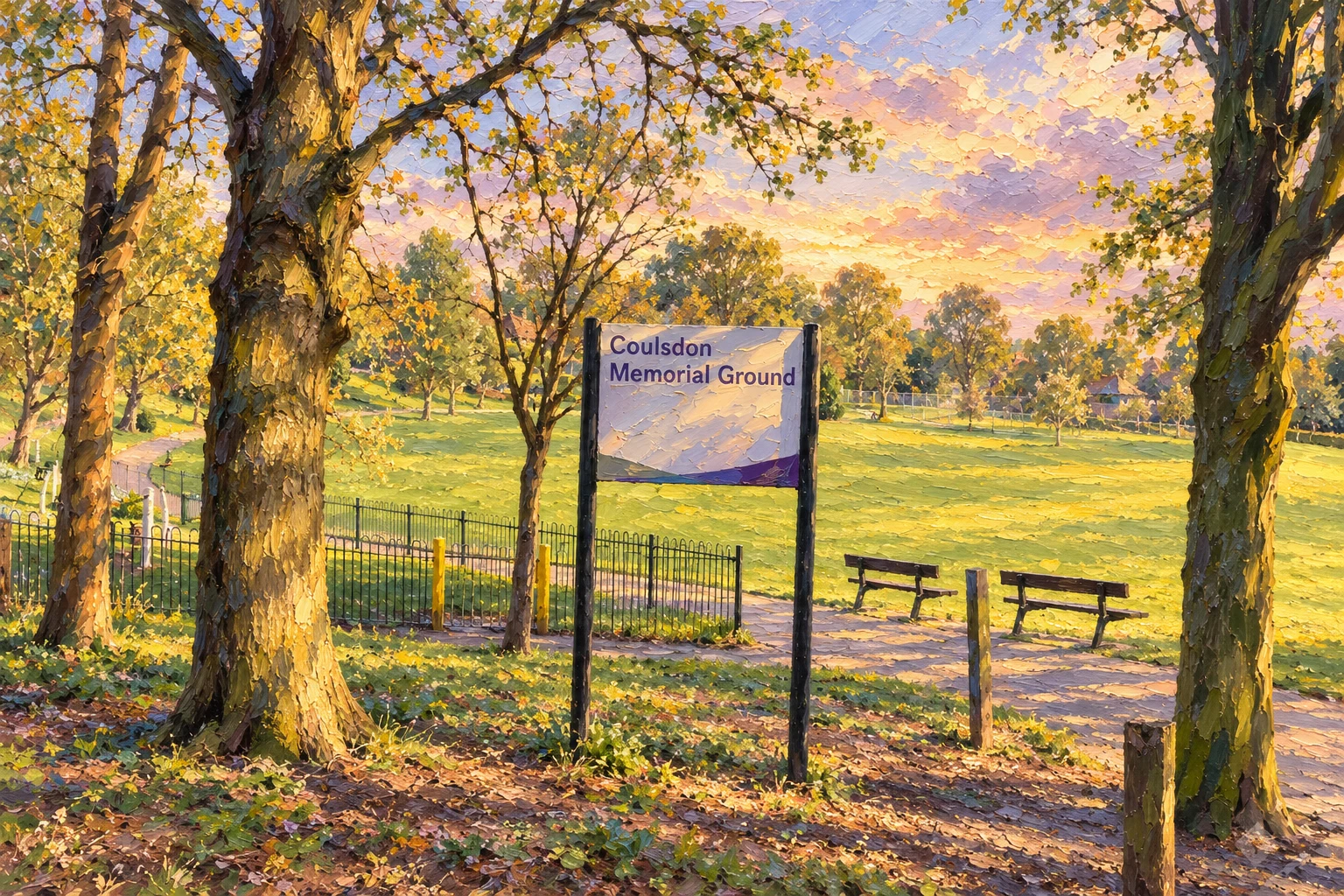
12 / COULSDON / CHILDHOOD OUTDOORS
Coulsdon Memorial Ground
Room to run, space to play.
I spent so much of my childhood playing in Coulsdon Memorial Park. The paths, open grass and familiar trees are part of the landscape I grew up with. This painting follows the entrance in my reference photograph, with its Coulsdon Memorial Ground sign, benches and railings.
A personal recollection by Taylor
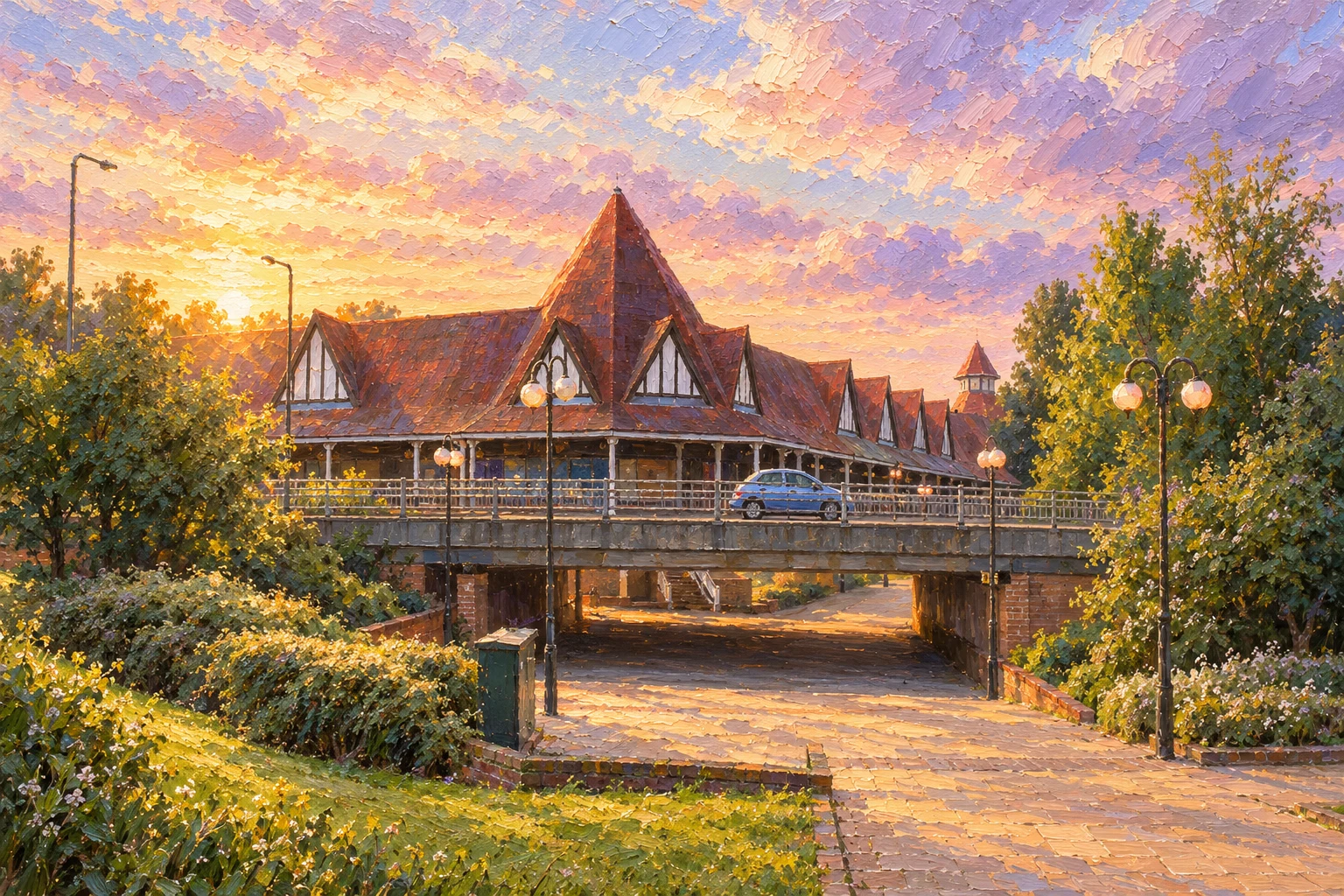
13 / COULSDON / AN EVERYDAY ADVENTURE
The bridge near Tesco
A little world beneath the bridge.
I used to play under this bridge while Mum met her friend, who worked at Tesco. It was an everyday meeting place for the adults and somewhere to explore for me. The distinctive roofline, bridge and walkway in the painting come from the photograph I shared.
A personal recollection by Taylor
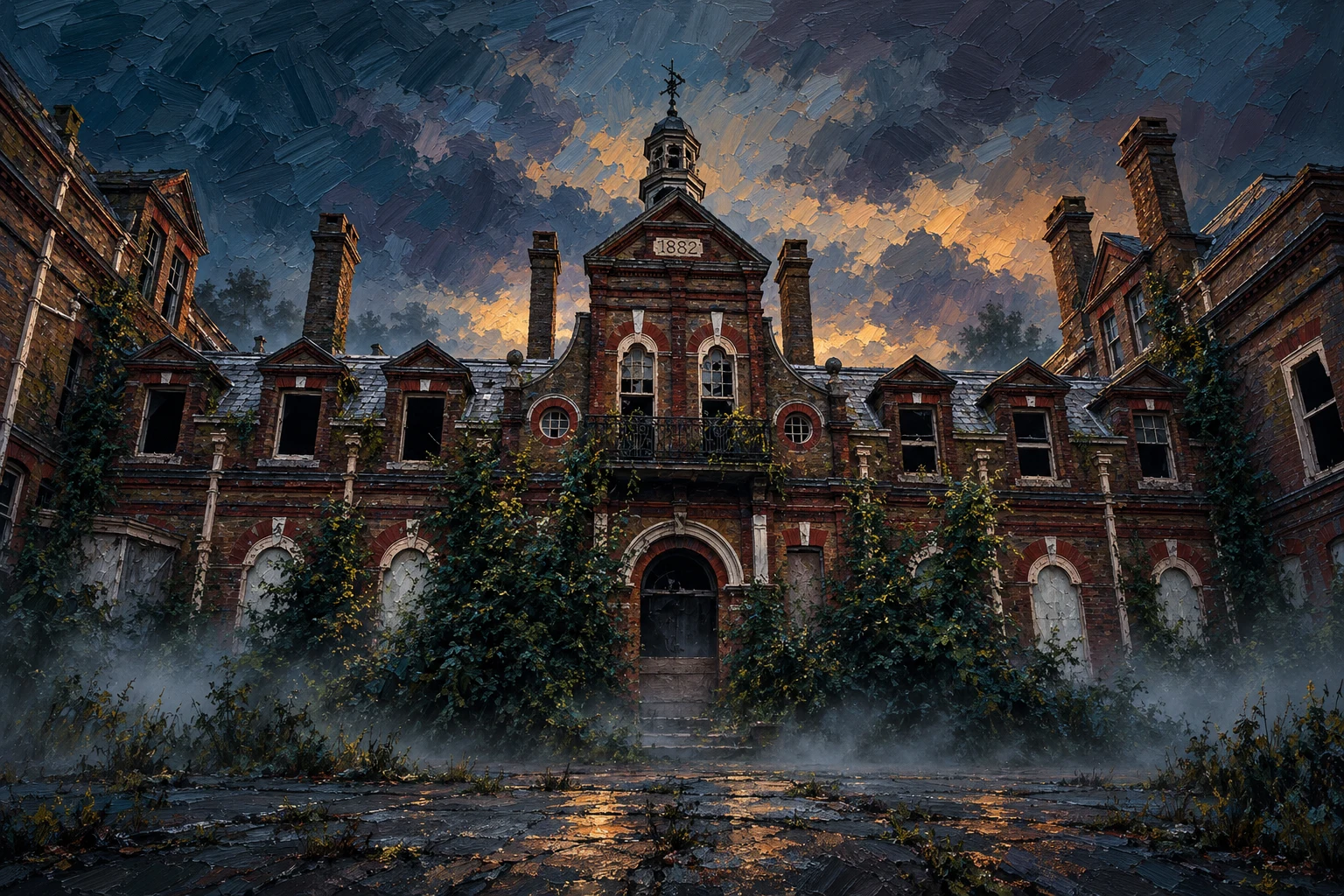
14 / COULSDON / OPPOSITE HOME, 2009–2014
Cane Hill Hospital, Coulsdon
A place across the road, a chapter of home.
I grew up living opposite the former Cane Hill Hospital site from 2009 to 2014, before moving from Coulsdon to the Isle of Sheppey. This historical oil-painting interpretation looks back at the earlier hospital building, rather than the redeveloped site today. Much of the complex was demolished from 2008 onwards. The history of the people who lived and worked here matters alongside the architecture.
A personal recollection by Taylor · Historical artistic reconstruction
No places match that search. Try another name or show all places.
ABOUT THE COLLECTION
The paintings are AI-generated artistic interpretations inspired by local landmarks and supplied references. They are not documentary photographs, surveyed views or records of current site conditions. Personal recollections are my own memories. Historical notes link to their sources. Descriptions checked on 27 October 2026.